
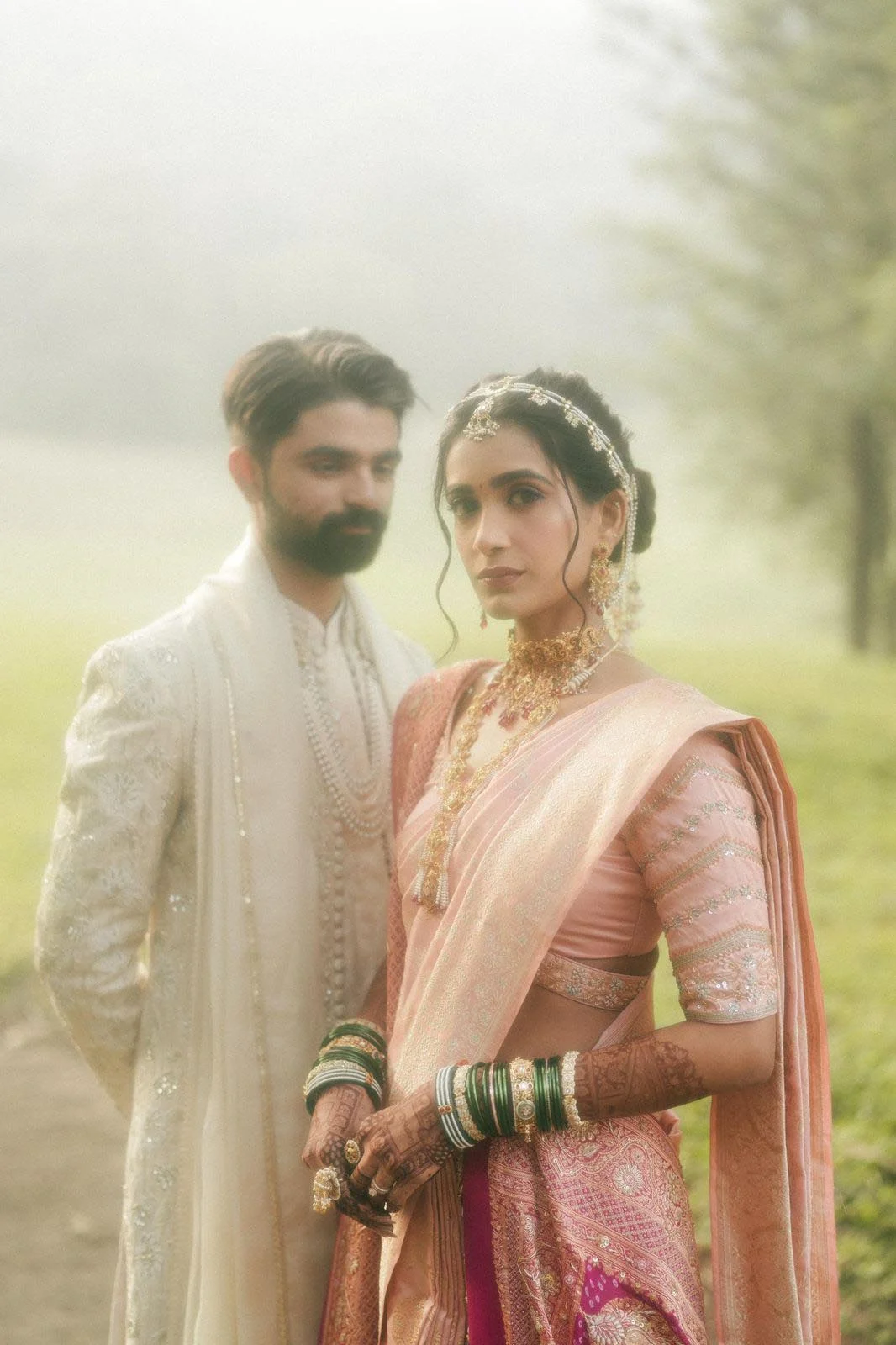
Clients who come to me having read about quiet luxury almost always ask the same follow-up question: "okay, but where do I actually buy this?" It is a fair question, because quiet luxury as an aesthetic is described far more often than it is mapped to actual, shoppable options - especially in an Indian context.
Here is a practical breakdown of where quiet luxury genuinely exists in the Indian market, across both ethnic and Western wardrobes.
Homegrown Labels for Investment Ethnic Wear
India's own handloom and craft-driven labels are arguably the most authentic expression of quiet luxury available anywhere, because they combine genuine material quality with design restraint. Labels focused on handwoven textiles - working directly with weaver cooperatives on Kanjeevaram, Banarasi, Chanderi, and Maheshwari silks - consistently produce pieces defined by understated colour palettes and craftsmanship over embellishment. Look for brands that are transparent about their weaving process and sourcing; this transparency is itself often a signal of genuine quality.
Where to Find Quality Handloom and Craft Textiles
- Direct from weaver cooperatives - many state emporiums and government-backed handloom outlets (like the various state Khadi and handloom boards) offer genuine handwoven textiles at fair prices, cutting out significant retail markup.
- Curated Indian design labels - a growing number of Indian designers focus specifically on modern silhouettes built from handwoven textiles, bridging the gap between traditional craft and contemporary quiet luxury aesthetics.
- Trusted local boutiques - in cities like Pune, Mumbai, and Bangalore, boutiques with long-standing weaver relationships often provide better quality assurance than large retail chains, along with the ability to see and feel fabric before buying.
International Brands That Reflect Quiet Luxury Values
For Western basics, several internationally recognised brands available in India lean into quiet luxury principles - clean lines, quality fabric, minimal branding - at considerably more accessible price points than true couture. Brands like COS and Massimo Dutti are widely stocked in Indian malls and offer well-tailored basics in exactly the neutral palette a capsule wardrobe needs. Zara's more premium lines within its broader collection also occasionally deliver on structure and fabric quality that punches above the price point.
"Quiet luxury does not require a couture budget. It requires knowing what to check - fit, fabric weight, construction - and applying that standard consistently, whether you are shopping a mall brand or a designer boutique." - Srushti Misal
What to Look For Regardless of Brand
- Neutral, versatile colours that integrate with an existing capsule rather than standing alone
- Natural fibre content - check the label even at accessible price points; many mid-range brands do offer higher-cotton or wool-blend options within their range
- Minimal or no visible branding - this is often what separates the quiet luxury pieces within a brand's range from its more logo-forward offerings
- Construction quality - check seams and finishing even on accessibly priced pieces; quality varies significantly within a single brand's collection
Building a Mixed Wardrobe: Homegrown Plus International
The most effective quiet luxury wardrobes I build for clients rarely rely on a single source. A base of quality international basics (trousers, blazers, coats) paired with a small, carefully chosen rotation of homegrown handwoven ethnic pieces gives genuine range - one system for Western dressing, one for Indian occasions, both governed by the same underlying principles of restraint and quality.
Shopping on a Limited Budget
Quiet luxury does not require unlimited spending power. On a limited budget, the highest-leverage moves are: prioritising tailoring and fit over brand name, investing in one or two higher-quality pieces per season rather than many cheaper ones, and choosing a genuinely restrained colour palette so that even accessible pieces read as considered rather than random. A well-fitted, well-cared-for mid-range wardrobe consistently outperforms an expensive but incoherent one.
A Practical First Step
Before your next shopping trip, decide your two core neutrals in advance. Shopping with a predetermined palette, across any brand or price point, is the single fastest way to build genuine coherence.
Red Flags to Watch For
As quiet luxury has grown into a marketing buzzword, some brands have started applying the label to products that do not actually reflect the underlying values. Watch for minimal-looking pieces priced at a significant premium with no disclosed fabric composition, "handwoven" claims that cannot be verified or explained by the seller, and packaging or marketing language that emphasises the aesthetic far more than the actual construction. A seller confident in genuine quality will usually be able to answer specific questions about fabric origin, weave, or construction without hesitation.
It is also worth being cautious of the reverse mistake - assuming that anything unbranded or minimal is automatically well made. Restraint in design is a starting point, not a guarantee. The same fabric and construction checks covered earlier in this guide (seam quality, fabric weight, weave evenness) still apply, regardless of how quiet or minimal a piece appears to be.
Starting Small and Building Gradually
You do not need to overhaul your entire wardrobe in one purchase cycle. Most clients build toward a genuine quiet luxury wardrobe over 12 to 18 months, starting with one or two foundational pieces - a well-fitted blazer, one quality handwoven saree - and expanding gradually as budget allows. This gradual approach also gives you time to genuinely test what you reach for repeatedly, which then guides where future investment should go.
Keep a simple running list on your phone of pieces you genuinely need versus pieces that momentarily caught your eye. Revisiting that list after a week almost always clarifies which purchases will earn their place in a considered wardrobe, and which were simply a passing reaction to clever marketing.
Frequently Asked Questions
Which Indian brands reflect quiet luxury values?↓
Homegrown labels focused on handwoven textiles and craft-driven design, along with weaver cooperatives and curated Indian design labels that prioritise fabric and construction over embellishment.
Are there international quiet luxury brands available in India?↓
Yes - COS, Massimo Dutti, and premium lines within brands like Zara are widely available and reflect quiet luxury principles at accessible price points.
Do I need to shop international brands to achieve quiet luxury?↓
No - well-tailored local pieces and quality handloom textiles, chosen with attention to fit and colour coherence, achieve the same effect.
How do I shop for quiet luxury on a limited budget?↓
Prioritise tailoring and fit over brand name, invest in fewer higher-quality pieces per season, and stick to a restrained colour palette.
Want Guidance on Where to Shop?
Book a Wardrobe Consultation with Srushti Misal
Get a personalised shopping map built around your budget and body type.
WhatsApp SrushtiOr view consultation pricing
More Posts You'll Love

Written by
Srushti Misal
Founder & Lead Stylist at Stylist Srushtee
Srushti Misal is a NIFT Kangra-trained personal stylist and wedding stylist based in Pune, India. With 120+ wedding looks curated across India and 50+ Bollywood projects, she specialises in luxury bridal styling, wardrobe transformation, and colour analysis. Featured in Mid-Day as a Wonder Women Entrepreneur of India (April 2026).
Read Full Bio