Old money style has become one of the most searched fashion terms of the past few years, but the actual substance behind the trend is far older than the term itself. It describes a wardrobe philosophy where wealth is communicated through quality, fit, and restraint rather than logos or maximalism - and it has genuine, specific rules that go beyond "look expensive."
As a stylist, I find this one of the most useful frameworks to teach clients, because it is not actually about spending more. It is about spending differently, and choosing with more discipline.
What Old Money Style Actually Is
At its core, old money style is dressing as if you have never needed to prove anything. Historically, this aesthetic developed among families whose wealth was inherited rather than newly made, where flashy displays were considered gauche and the goal instead was to look put-together, correct, and quietly well-resourced. The modern "quiet luxury" movement borrowed this same logic and applied it more broadly, regardless of actual family history.
The tell is almost always in the details: a wool coat that fits perfectly at the shoulder, a leather bag with no visible branding, shoes that are polished rather than trend-driven, jewellery that is real but modest in scale. None of it shouts. All of it is deliberate.
The Five Pillars of Old Money Style
1. Fit Over Everything
A ₹3,000 shirt that is tailored to fit perfectly will always read as more expensive than a ₹30,000 shirt that hangs wrong. Old money style treats tailoring as non-negotiable - hems, sleeve length, and shoulder seams are adjusted rather than accepted as-is off the rack.
2. A Restricted, Neutral Colour Palette
Cream, camel, navy, black, white, and soft grey form the backbone of an old money wardrobe. Colour is used sparingly and purposefully - one statement piece per outfit at most, never several competing for attention.
3. Natural Fabrics
Wool, cashmere, silk, linen, and high-quality cotton dominate. These fabrics age well, hold structure, and photograph with a quality that synthetic alternatives simply cannot replicate, regardless of print or cut.
4. Zero Visible Branding
This is perhaps the most counterintuitive rule for anyone new to the aesthetic: the more expensive the item, the less it announces itself. Logos and loud branding are associated with newer money trying to signal status; old money style deliberately removes that signal entirely.
5. Longevity Over Trend
Pieces are chosen to be worn for a decade, not a season. A well-made trench coat, a classic blazer, a good pair of loafers - these are investments precisely because they are not tied to a trend cycle that will date them within a year.
How This Translates Into Indian Wardrobes
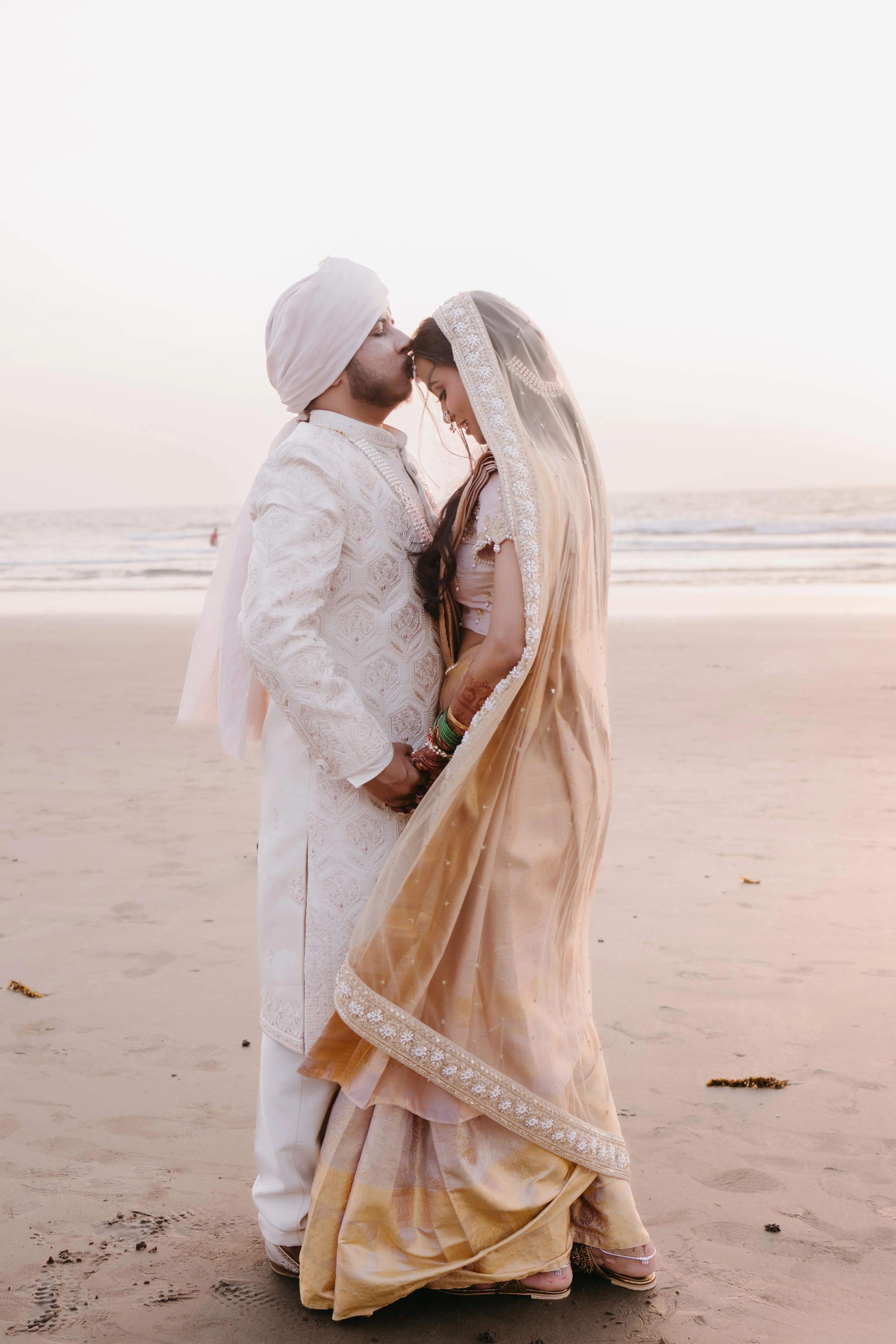
Old money style is often discussed purely in Western terms - trench coats, cashmere, Oxford shoes - but the same principles apply directly to Indian textiles and silhouettes. A handwoven Kanjeevaram in a muted olive or deep maroon, with minimal zari and restrained embellishment, embodies exactly the same values as a well-cut cashmere coat: quality material, quiet colour, no excess.
Similarly, well-tailored khadi separates, a Banarasi dupatta in a subdued palette, or a bandhgala in fine wool rather than a heavily embellished one - all of these translate quiet luxury into an unmistakably Indian vocabulary, without importing a foreign aesthetic wholesale.
"Old money style is not a costume. It is a set of decisions - about fit, fabric, and restraint - that happen to look effortless once you have made them consistently enough." - Srushti Misal
Old Money Style vs Quiet Luxury: Is There a Difference?
The two terms are used almost interchangeably now, but there is a subtle distinction. "Old money style" specifically references the aesthetic historically associated with inherited generational wealth. "Quiet luxury" is the broader, more modern umbrella term - it describes anyone, regardless of background, who chooses understated, high-quality dressing over logo-driven fashion. In practice, the wardrobe principles are nearly identical.
Building an Old Money Wardrobe Without Overspending
This is the part most people get wrong: old money style is often assumed to require an unlimited budget, but the actual discipline is about buying fewer, better pieces over time rather than a large volume of anything. A well-tailored neutral wardrobe, built piece by piece with attention to fit and fabric, is frequently more cost-effective across several years than constantly replacing cheaper, trend-driven items that wear out or date quickly.
Where to Start
Begin with tailoring, not shopping. Take three pieces already in your closet to a good tailor and have them properly fitted. The immediate difference in how they read is often the fastest, cheapest way to understand the entire aesthetic.
Common Mistakes When Attempting Old Money Style
- Confusing "boring" with "quiet": Restraint does not mean the absence of personality - it means personality expressed through cut, texture, and quality rather than logos or print.
- Ignoring accessories: A worn-out bag or scuffed shoes undermine an otherwise perfect outfit. Old money style pays as much attention to maintenance as to the initial purchase.
- Buying "old money brands" without fit: A recognisable heritage label does nothing if the garment does not fit properly. The aesthetic is about the discipline, not the label.
Old Money Style for Men in an Indian Context
The same five pillars apply directly to menswear, and arguably translate even more naturally into Indian formal wear. A well-tailored bandhgala in fine wool or a muted linen kurta-pyjama set, with minimal embroidery and impeccable fit, embodies quiet luxury as completely as a Savile Row suit does in a Western context. The signals are identical: quality fabric, correct proportions, and an absence of logos or excessive embellishment.
For everyday menswear, this means prioritising a well-fitted white or blue shirt in quality cotton over a heavily branded polo, and a simple leather watch over anything with visible logo hardware. The wristwatch, in particular, is one of the clearest quiet luxury signals in menswear - a classic, understated design consistently reads as more established than an obviously flashy one.
Frequently Asked Questions
What is old money style?↓
A wardrobe philosophy built on quality, fit, and understatement rather than visible branding - neutral colours, natural fabrics, classic silhouettes, and pieces built to last.
How is quiet luxury different from old money style?↓
Quiet luxury is the broader modern term for understated, high-quality dressing regardless of background. Old money style specifically references the aesthetic historically tied to inherited wealth.
Can old money style work with Indian ethnic wear?↓
Yes - a handwoven Kanjeevaram in a muted tone, well-fitted khadi, or a fine wool bandhgala all reflect the same values applied directly to Indian textiles.
Is old money style expensive to build?↓
It requires investing in fewer, better pieces rather than volume, but built over time it is often more cost-effective than constantly replacing trend-driven items.
Want to Build This Wardrobe?
Book a Wardrobe Consultation with Srushti Misal
A wardrobe consultation (₹6,999) audits what you already own and maps a quiet-luxury direction from there.
WhatsApp SrushtiOr view wardrobe consultation pricing
More Posts You'll Love

Written by
Srushti Misal
Founder & Lead Stylist at Stylist Srushtee
Srushti Misal is a NIFT Kangra-trained personal stylist and wedding stylist based in Pune, India. With 120+ wedding looks curated across India and 50+ Bollywood projects, she specialises in luxury bridal styling, wardrobe transformation, and colour analysis. Featured in Mid-Day as a Wonder Women Entrepreneur of India (April 2026).
Read Full Bio