Most Indian skin tones fall into the warm or warm-neutral spectrum - yellow, olive, or golden beneath the surface. The fastest at-home test: in natural light, hold a piece of warm yellow fabric and a piece of cool lilac against your bare face. If yellow makes your skin glow and look fresh, you’re warm-toned. If lilac lifts your complexion more, you lean cool or neutral-cool. This single test will guide most color decisions better than any skin tone chart.
What Color Analysis Actually Reveals
Color analysis maps your natural coloring - skin undertone, eye color, and hair color - to a palette of shades that harmonise with your features rather than compete with them. The right colors make you look rested and healthy without makeup. The wrong ones make you look tired, dull, or unwell even in expensive clothes.
For Indian women, this matters particularly because Western color guidance is calibrated for Western complexions. Recommendations like "warm skin tones should wear coral" are often written with peachy-pink Western warm skin in mind, not the yellow-olive warm undertones common across India. The specific shades that work are different.
How to Find Your Undertone
The Vein Test
Look at the inside of your wrist in natural daylight, not under yellow indoor lighting. If your veins appear distinctly green, you have warm undertones. If they appear blue or purple, you have cool undertones. If you genuinely cannot tell, you likely have neutral undertones.
The Jewellery Test
Gold jewellery suits warm undertones - it creates harmony rather than contrast. Silver jewellery suits cool undertones. If both work equally well, you’re likely neutral. Most Indian women find gold more naturally flattering, which reflects the prevalence of warm undertones across the subcontinent.
The Fabric Drape Test (Most Accurate)
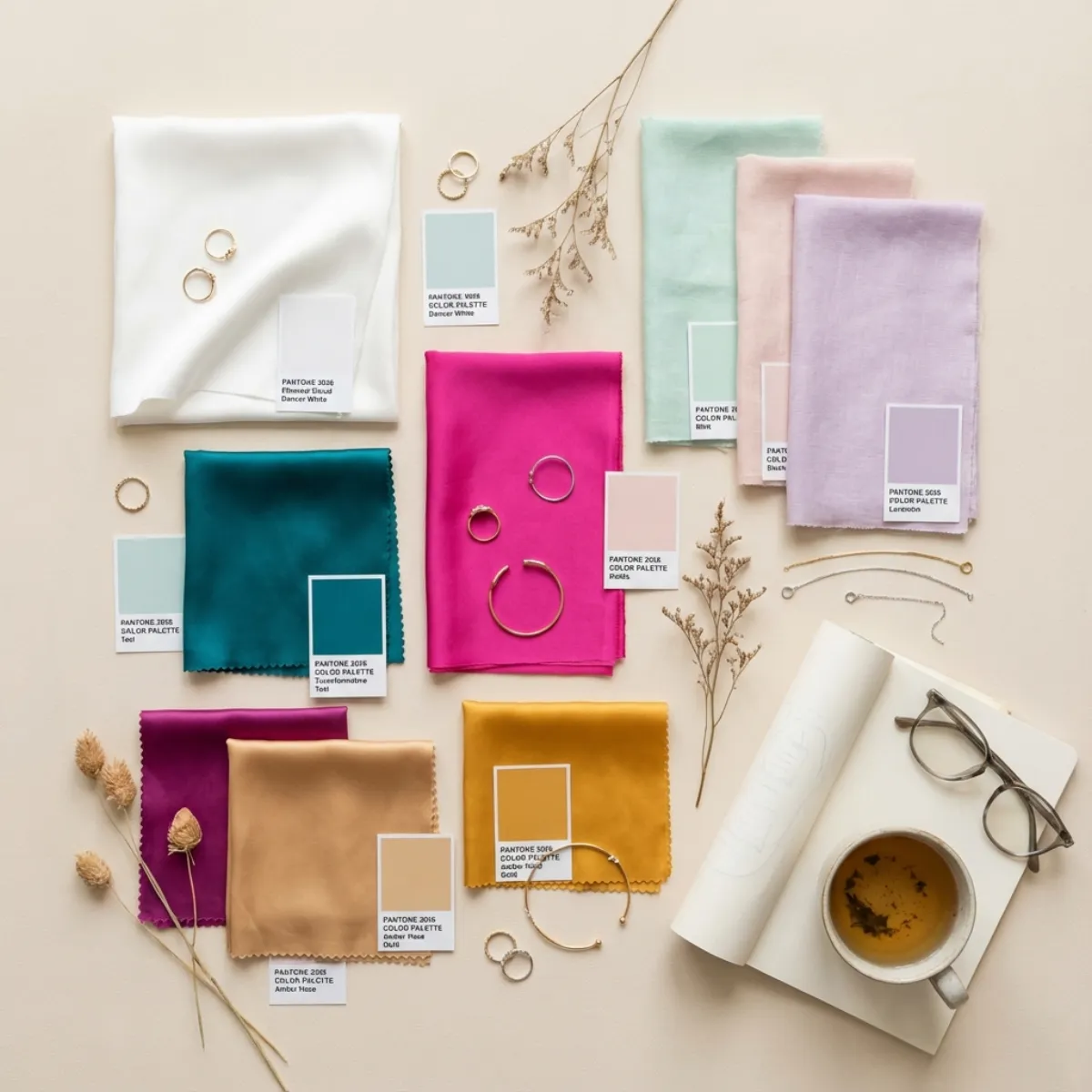
This is what I use in professional colour analysis sessions. In natural light (near a window, no filters), hold swatches of pure warm colours (terracotta, warm yellow, warm peach) and pure cool colours (lilac, cool pink, icy blue) against your bare face and neck. The colours that make your skin look even, bright, and healthy are your undertone family. The ones that make shadows appear under your eyes or make your skin look sallow are the opposite undertone.
A common confusion: undertone (warm, cool, neutral) is completely independent of how light or dark your skin is. You can have very fair Indian skin with warm undertones, or very deep Indian skin with cool undertones. Both your depth and your undertone matter for color selection - they are separate variables.
Best Colors for Warm-Undertone Indian Skin
Warm undertones are by far the most common across India. If your skin has yellow, golden, olive, or peachy hues beneath the surface, these colors will make you look alive and radiant:
- Earth tones: Terracotta, rust, burnt orange, ochre, warm mustard, camel, chocolate brown
- Warm greens: Olive, bottle green, forest green, warm teal (with yellow base, not blue base)
- Warm reds: Brick red, tomato red, vermilion, warm coral - not blue-based reds
- Neutrals: Warm ivory, cream, off-white, warm beige - not pure white or cool grey
- Metallics: Gold, bronze, copper - these are your metallics, not silver
Avoid for warm undertones: Bright fuchsia, cool lilac, icy blue, ash grey, pure stark white, silver fabric, and any colour with a strong blue-pink base.
Best Colors for Cool-Undertone Indian Skin
Cool undertones - pink, red, or bluish-grey beneath the surface - are less common in India but more prevalent among South Indian and Northeast Indian complexions. Your palette is distinctly different:
- Jewel tones: Royal blue, cobalt, sapphire, emerald, deep teal (blue-based)
- Cool pinks and purples: True fuchsia, hot pink, lavender, plum, violet, cool mauve
- Cool reds: Cherry red, raspberry, cool burgundy - not orange-reds
- Neutrals: Pure white, cool grey, charcoal, navy
- Metallics: Silver, white gold, platinum - these suit you better than yellow gold
Avoid for cool undertones: Orange, rust, warm yellow, camel, olive green, warm browns, and gold-tone fabrics (though silver jewellery can still complement your look).
Best Colors for Neutral-Undertone Indian Skin
Neutral undertones offer the most flexibility but can also be the most confusing, because both warm and cool extremes may not look quite right. Your sweet spot is usually muted, sophisticated tones rather than very saturated ones:
- Dusty rose, soft mauve, warm nude, soft sage, muted teal
- Medium earth tones - not too bright, not too dark
- Soft pastels in any temperature tend to work
- Both gold and silver jewellery are likely to work
Color Analysis for Indian Ethnic Wear
Western color analysis was developed for Western fashion silhouettes. For sarees, lehengas, salwar suits, and ethnic fusion, a few additional rules apply:
- Heavy embroidery changes the colour read. A lehenga with dense gold zari on a deep red base reads very differently than a plain red fabric. The thread color and proportion matter as much as the base fabric colour when assessing whether it suits your undertone.
- The dupatta is a face-framing piece. In sarees and salwar suits, the dupatta sits closest to your face and neck. Its colour should always be checked against your undertone - a mismatch here is more impactful than a mismatch in the skirt or pallu.
- Indian reds are often warm-toned. Traditional Indian reds in silk sarees (slightly orange-warm) tend to suit warm-undertone Indian women better than Western bridal reds (which are often cool, blue-based). This is why many Indian brides instinctively feel better in traditional Indian reds than in Western-styled red lehengas.
Getting Your Colors Professionally Analysed
A professional colour analysis session involves seasonal draping - holding calibrated colour swatches against your face in natural light to observe exactly how each colour family interacts with your skin. Sessions with Srushtee include a personalised digital colour palette card you can use for shopping. Book a personal styling session to get your colour analysis done as part of a full wardrobe consultation.
Ready to Transform Your Style?
Book a consultation and let's create a wardrobe you'll love.
Book a ConsultationWant personalized styling advice? Book a consultation or fill out the inquiry form.